Articles
How to Start a Bookkeeping Business from Home in 2026
At 7:15 a.m., you are at the kitchen table with coffee, a laptop, and a list of small business owners who all need clean books by month end. One client forgot to upload statements. Another sent receipt photos by text. A third wants answers about cash flow before noon. That setup can become a flexible, profitable home business, or a low paid admin job with your name on it. The difference is the system you build from the start.
People searching how to start a bookkeeping business from home usually already have the raw material. They are organized, comfortable with numbers, and tired of using that skill to make someone else’s business run better. They want recurring income, control over their schedule, and work they can deliver remotely without an office lease or a long commute.
Those goals are realistic.
What does not work anymore is building a home bookkeeping business around manual cleanup, endless document chasing, and selling your time by the hour. That model fills your calendar fast, but it does not scale well. Every client adds more exceptions, more follow-up, and more unpaid admin.
A better approach is to build for capacity early. Pick a narrow client profile. Define what is included and what costs extra. Set up your legal, security, and workflow basics before you start saying yes to everyone. Use software that pulls transactions, standardizes tasks, and reduces hand entry. Tools like Booksmate matter here because they remove a lot of the repetitive work that burns out solo bookkeepers and caps growth.
That is the part many beginner guides miss. The service is not “I enter data from home.” The service is accurate books, clean month-end delivery, and reliable financial visibility for clients, delivered through a process that does not fall apart when you add the tenth or twentieth account.
This article covers the practical version. No fantasy income claims. No recycled advice from people who have never closed books for messy clients. Just a clear path to building a home bookkeeping business that runs efficiently, protects your time, and has room to grow.
The Dream and Reality of Running a Home Bookkeeping Business
At 7:30 a.m., you are at your kitchen table with coffee, a laptop, and three client messages already waiting. One needs last month’s numbers for a lender. One forgot to upload receipts. One has duplicate transactions from a payment processor that did not map correctly. This is what a home bookkeeping business looks like. Flexible, yes. Peaceful by default, no.
The appeal is real. You can work remotely, keep overhead low, and build recurring monthly revenue around a skill businesses already need.
The part that surprises new bookkeepers is where the time goes. A surprising amount of time disappears into logging into portals, chasing missing statements, fixing broken bank feeds, answering one-off questions, and cleaning up client mistakes that were never in the original scope. If you run the business manually, your home office turns into a small admin factory.
That is where many people stall. They know bookkeeping. They do not build an operation.
A profitable home-based practice in 2026 depends less on where you work and more on how you deliver. Strong bookkeepers still need judgment, accuracy, and clean reconciliations. But the firms that grow without burning out are the ones that use standardized workflows, client boundaries, and automation from day one. Tools like Booksmate help reduce hand entry, organize repeat work, and keep month-end from turning into a constant scramble.
The income potential is still solid, as noted earlier. The bigger point is that clients do not pay premium fees because you work from home. They pay for reliable delivery, fast communication, and books that are clean when they need them.
That changes how you should view the business. You are not selling hours at a desk. You are selling a process that produces accurate financials with less friction, fewer delays, and less dependence on your personal bandwidth.
I learned this early. The fastest way to cap your income is to become the human glue holding every messy workflow together.
A home bookkeeping business can become a highly profitable practice. It usually does when the owner stops acting like a freelance pair of hands and starts building a system clients can trust every month.
Laying the Foundation for a Profitable Business
A profitable home bookkeeping business is built before the first client signs. The early decisions shape how fast you can deliver, how much custom work creeps in, and whether the business can grow without turning into a 60-hour job.
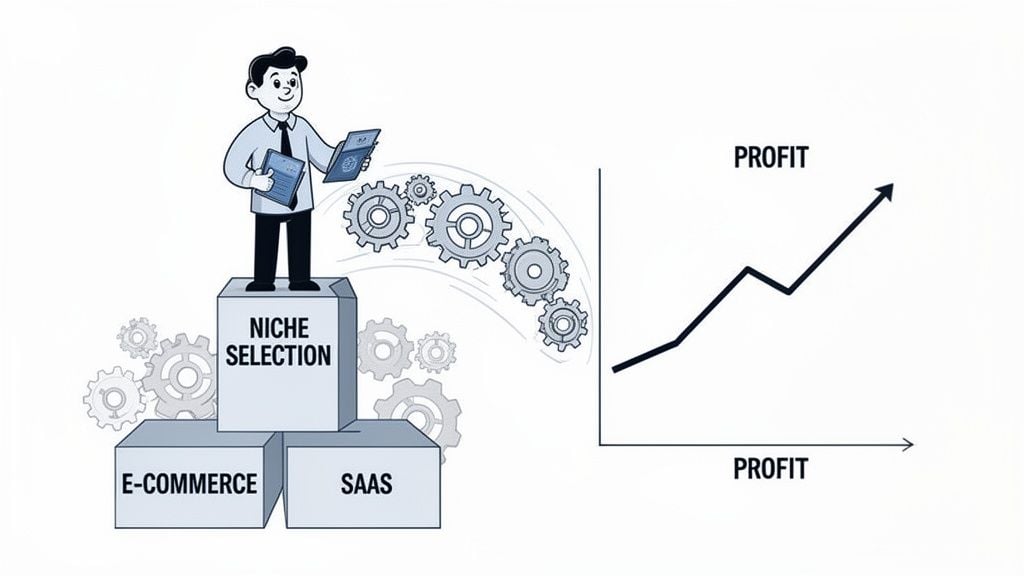
Pick a niche that rewards standardization
Generalist bookkeeping looks flexible. It usually creates more exceptions, more one-off questions, and more time lost switching between industries that run on different habits.
A better starting point is a niche where the work repeats. E-commerce brands, agencies, consultants, creators, and SaaS companies often fit well because they already operate online and tend to need monthly support, not random once-a-year help. The primary test is simpler than demand alone. Can you build one clean workflow for this type of client and run it over and over with minor adjustments?
That is where scale starts.
A niche gives you faster pattern recognition. You see the same payment processors, the same reporting gaps, the same month-end issues, and the same cleanup risks. That makes onboarding faster and margins better. It also makes automation more useful, because tools like Booksmate work best when your clients follow similar document and transaction patterns.
Good niches usually have four traits:
- High transaction volume or multi-platform activity
- Clients who already use cloud tools comfortably
- Ongoing monthly bookkeeping needs
- Problems you can solve with a repeatable process
Choose the niche where your delivery model can stay clean. That matters more than picking the hottest industry on social media.
Write a one-page operating plan
Skip the formal business-plan template.
Write one page that gives you rules for making decisions in the first 90 days. If the plan does not help you decide who to accept, what to charge, or how to deliver the work, it is too vague.
Include these five points:
- Ideal client
- Included services
- Excluded services
- Pricing approach
- First client acquisition channel
I would also add two operational decisions early. Pick your core accounting platform and define your monthly workflow before you start selling. New bookkeepers often wait too long to do this, then build offers around whatever each prospect asks for. That leads to a patchwork business that is hard to run from home.
The goal is clarity, not polish.
Set up the business properly from the start
Legal and financial setup is boring until it is expensive.
Many new bookkeepers start as sole proprietors because it is quick. For a serious home-based practice, an LLC is often the cleaner option because it separates business activity from your personal affairs. As noted earlier, the Upwork resource recommends choosing an LLC and includes obtaining an EIN as part of the early legal setup.
A practical setup usually includes:
- Business entity: Often an LLC for solo operators
- EIN: Use this instead of your personal SSN where possible
- Business bank account: Keep business money separate from personal spending
- Bookkeeping engagement agreement: Define scope, deadlines, responsibilities, and payment terms
- Professional liability insurance: Worth pricing early if clients rely on your reporting
Clients notice the difference. A proper setup signals that you run a business, not a side hustle that may disappear after tax season.
Treat compliance and data handling as part of the service
Bookkeepers handle bank feeds, payroll records, merchant statements, logins, and personal information. Sloppy data habits create risk fast, especially if you work remotely and clients send files from multiple systems.
The practical fix is simple. Build a secure workflow before you need one.
Bookkeepers.com’s guide to starting a bookkeeping business covers the business setup side well. For day-to-day operations, the bigger issue is controlling how client data enters your process, where it is stored, and who can access it. If you plan to work with clients across state or national borders, check the privacy rules that apply to the client relationship and the systems you use.
For a solo home office, good compliance habits look like this:
- Use secure file collection: Avoid casual document requests over email
- Limit access: Give yourself and any contractors only the permissions needed
- Document storage rules: Know exactly where statements, IDs, and reports live
- Keep business and personal accounts separate: Do not store client work in personal drives or inboxes
- Use automation carefully: Tools should reduce manual handling, not scatter sensitive files across more apps
This matters for another reason. Clean data intake makes automation possible. If every client sends records in a different way, Booksmate and similar tools cannot save much time. Standardized intake is what turns software into capacity.
Draw hard service boundaries early
Revenue pressure makes beginners agree to too much. That is how monthly bookkeeping turns into payroll fixes, sales tax questions, old cleanup projects, invoicing support, and year-end work that belongs with a tax professional.
Scope creep kills margins. It also destroys delivery speed.
Set boundaries before you need them. Put them in the proposal, the engagement letter, and the onboarding process. Say clearly what is included, what is billed separately, and what you do not handle at all.
A few examples help:
- Monthly categorization and reconciliations
- Basic management reports
- Cleanup work billed separately
- Payroll coordination only, not payroll processing
- No tax filing unless that is a defined service line
Clients usually respect clear boundaries when you set them early. They push when the rules are fuzzy.
A profitable bookkeeping business from home runs on repeatable work, controlled inputs, and clear scope. The stronger that foundation is, the easier it becomes to automate routine tasks, protect your time, and grow without hiring too soon.
Building Your Modern Tech Stack and Skills
At 8:30 p.m., a home-based bookkeeper is still logging into Amazon, Stripe, PayPal, and three vendor portals, trying to find missing invoices before month-end. The books are not late because reconciliation is hard. They are late because document collection keeps eating the day.
That is the difference between a bookkeeping practice that stays small and stressful, and one that scales cleanly from home. Strong bookkeeping still depends on judgment, accuracy, and communication. But in 2026, the firms that grow without burning out build their systems around automation first.
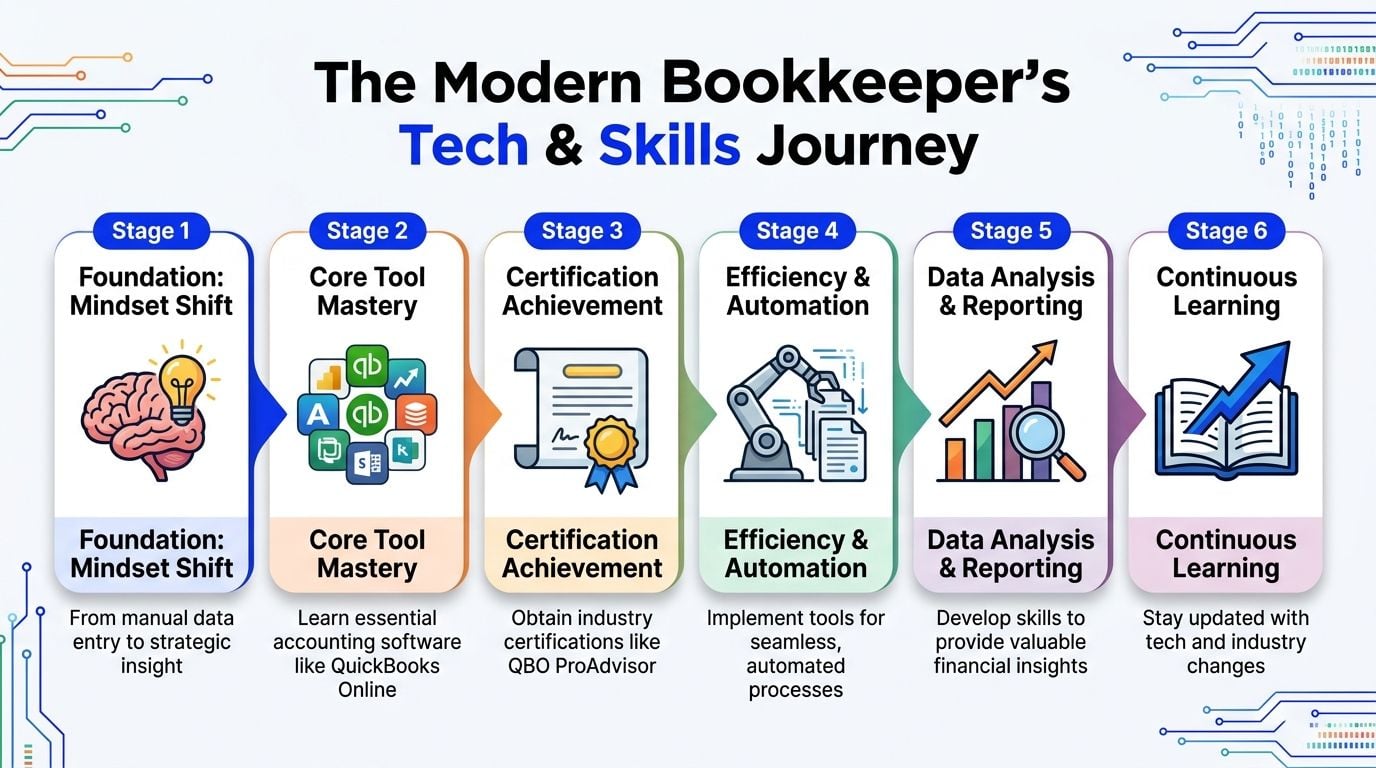
Learn one core accounting platform thoroughly
Pick one primary accounting platform and get fast in it.
For most solo bookkeepers, that means QuickBooks Online or Xero. You do not need five certifications and a dozen app badges in your first year. You need one system you can set up correctly, review efficiently, and troubleshoot without hesitation.
Certification helps, but mostly because it forces repetition and gives prospects confidence. I have seen new bookkeepers waste months dabbling across platforms instead of becoming reliable in one. Depth wins early. Breadth can come later if your client base demands it.
Build a stack that saves time every single month
A practical home-office stack has four working parts:
- Accounting system: QuickBooks Online or Xero
- Client communication and document portal: One secure place for requests, uploads, and updates
- Task management: A tool that tracks monthly close steps, due dates, and open questions
- Document and invoice capture automation: Software that collects records without requiring constant follow-up from you
Many beginners miss this piece. They buy bookkeeping software and maybe a proposal tool, then leave the most repetitive work untouched. That work is document retrieval, and it is usually the first capacity ceiling.
Manual invoice chasing kills scale
A surprising amount of bookkeeping time has nothing to do with accounting judgment. It goes to inbox searches, portal logins, PDF downloads, file renaming, and repeated follow-ups for records that should have been collected automatically.
BILL’s article about starting a bookkeeping business points out a gap that many basic guides skip. Invoice fetching from places like Amazon, Stripe, and PayPal can consume a significant portion of a bookkeeper’s time per client. That is exactly why an automation layer matters so much in a home-based firm.
Tools like Booksmate solve that bottleneck directly by pulling invoices and documents from email accounts and vendor portals into a cleaner, repeatable workflow. Instead of spending hours chasing records, you review exceptions, resolve missing items faster, and keep month-end moving. That one shift changes your capacity more than adding another general-purpose app ever will.
This is not a minor efficiency tweak. It changes the economics of the business.
A manual process can look manageable with three clients. At ten, it starts spilling into nights and weekends. At twenty, you either hire early, accept constant backlog, or rebuild the workflow you should have designed from the start.
Skills that matter more than software shopping
A lean stack beats a bloated one. The primary advantage comes from pairing the right tools with operational discipline.
Focus on these skill areas:
- Platform fluency: Catch mapping errors, duplicate transactions, and reconciliation problems quickly
- Workflow design: Run the same close process every month with as little variation as possible
- Exception handling: Spot what needs human review and avoid wasting time on routine items
- Client communication: Ask for missing information clearly, with deadlines and next steps
- Data hygiene: Keep naming, storage, and access consistent so your automations keep working
That last point matters more than many new bookkeepers expect. Automation breaks when client records arrive in five different formats across six different channels. Good systems depend on standardized inputs.
Automation increases value
Some bookkeepers still treat automation like a shortcut that makes the service less valuable. In practice, the opposite is true.
Clients are not paying for manual clicks. They are paying for current books, fewer surprises, and reliable financial information. If software handles the repetitive collection layer, your time goes to review, cleanup decisions, cash flow questions, and communication that clients notice.
The value is in the quality of the books and the consistency of delivery, not in how long it took to gather the paperwork.
That mindset protects your quality of life. A highly profitable bookkeeping business from home is possible, but only if your systems absorb routine work before it turns into constant admin drag. Use technology early. Build around repeatability. Keep your time for the work that requires judgment.
How to Price Your Services and Create Packages
A new client says they only need “basic monthly bookkeeping.” Three weeks later, you are chasing receipts in two apps, fixing Stripe mappings, answering payroll questions, and cleaning up six months of miscoded transactions for a fee that barely covers the work. That is how underpriced home bookkeeping businesses get built.
Pricing needs to be designed around delivery, not guesswork.
Hourly billing feels safe at the start because it is easy to explain. It is also one of the fastest ways to cap your income and reward inefficiency. If you build a cleaner workflow, use better software, and finish the work faster, hourly pricing pays you less for doing the job better.
Monthly packages fit bookkeeping much better, especially if you want a business that can scale from home without turning into a job with endless admin. As noted earlier, retainers usually match the economics of this work better because they account for review time, client communication, software oversight, and the routine friction that never shows up neatly on a timer.
Why fixed monthly pricing works better
A package gives both sides a clear operating agreement. The client knows what happens each month, what it costs, and what falls outside the plan. You know the scope, the workflow, and the margin you need to protect.
That matters even more in an automation-first practice.
If you use tools like Booksmate to collect documents, standardize intake, and reduce manual back-and-forth, your cost to serve drops without lowering the value of the service. The client still gets current books, fewer mistakes, and faster turnaround. You keep the gain from better systems instead of billing fewer hours.
This is how modern firms out-compete traditional bookkeepers. They do not win by being cheaper. They win by being more consistent, more responsive, and less dependent on manual labor.
Build packages around complexity, not just tasks
New bookkeepers often price from a checklist. Reconcile bank account. Categorize transactions. Send reports. That is too shallow.
Primary pricing drivers are complexity, volume, and exception handling. A service business with one bank account and clean monthly inputs is not the same as an ecommerce business with Shopify, Stripe, PayPal, sales tax issues, inventory adjustments, and owner questions every week.
Start with three packages. That is enough structure to guide buying decisions without creating a menu nobody understands.
Feature
Essentials Package ($300-$500/mo)
Growth Package ($600-$1200/mo)
Scale Package ($1500+/mo)
Core bookkeeping
Monthly categorization, reconciliations, and tighter review cadence
Full monthly bookkeeping management with advisory-style support
Document handling
Client provides documents through standard workflow
Automated document collection and efficient processing
Automated collection plus complex multi-system coordination
Reporting
Basic monthly financial reports
Monthly reports plus performance snapshots
Custom reporting and management-focused review
Communication
Standard monthly email support
Priority communication and scheduled review touchpoints
Higher-touch communication and planning discussions
Best fit
Simple service business with low complexity
Growing online business with platform sprawl
Established business that needs cleaner systems and sharper visibility
Those price ranges are starting points, not rules. In practice, niche matters a lot. A therapist with clean records is usually easier to serve than a contractor with job costing, reimbursables, and inconsistent paperwork, even if monthly revenue looks similar.
What each package should include
Package names matter less than package boundaries.
Every offer should spell out the operating details in plain language:
- Included work: reconciliations, monthly close, reporting, software used, communication cadence
- Excluded work: historical cleanup, tax filing, payroll corrections, invoicing, bill pay, 1099 prep, app troubleshooting beyond normal bookkeeping support
- Volume assumptions: number of accounts, platforms, entities, and approximate monthly transaction load
- Client responsibilities: document deadlines, access requirements, and response times
- Cleanup pricing: one-time catch-up fee, hourly cleanup rate, or separate cleanup project
- Repricing triggers: major transaction growth, added systems, payroll complexity, late records, or frequent custom requests
Write this into every proposal and engagement letter. If pricing changes only after frustration builds, the conversation gets personal. If repricing triggers are defined up front, the conversation stays professional.
Price for the business you want, not the client you are afraid to lose
Underpricing usually starts from fear. Fear of hearing no. Fear of being new. Fear that another bookkeeper will quote less.
Cheap clients often cost the most to serve.
A low monthly fee attracts businesses that want unlimited help, late turnaround forgiveness, and custom support without structure. Those clients create inbox clutter, deadline pressure, and margin problems. A well-priced package filters them out before they become operational headaches.
I learned this early. The clients who pushed hardest on price were rarely the clients who respected deadlines, systems, or scope. The better clients wanted clarity. They wanted to know what was included, how the process worked, and whether I could keep their books accurate without constant hand-holding.
A practical way to set your first prices
If you are not sure where to start, estimate the monthly work in three layers.
First, calculate the base bookkeeping work for a clean client with standardized records. Next, add the complexity premium for extra platforms, weak processes, or messy inputs. Then add the management layer, which covers communication, review, software administration, and the inevitable exceptions.
Do not price as if every month will be smooth. It will not.
If your workflow is built correctly, automation reduces labor on repeat tasks. It does not remove the need for judgment. Your price should reflect both. Software handles collection and routine processing. You handle review, decisions, and accountability.
Stop selling time
Good packaging changes the sales conversation. Prospects stop asking, “What is your hourly rate?” and start asking which service level fits their business, what support they need, and how quickly you can take over the monthly close.
That is a better buying conversation. It is also a better delivery model for a home bookkeeping business that needs to scale without burning you out.
Winning Clients and Perfecting Your Onboarding Workflow
A lead says yes on Tuesday. By Friday, they still have not signed the engagement letter, nobody has sent bank access, and three different people are emailing you conflicting instructions. That client does not have a bookkeeping problem alone. They have a process problem. If you do not control onboarding from the start, that mess becomes your monthly routine.
Finding clients gets easier once your niche, package, and operating rules are clear. Closing the right clients gets easier when prospects can see that your business runs on systems instead of inbox chaos.
Start with client channels that reward clarity
Early on, simple beats clever.
Use channels where a prospect can quickly decide whether you understand their business model, reporting pain points, and software stack. In practice, that usually means:
- LinkedIn: Publish short posts that show how you solve real bookkeeping issues in your niche, such as payout reconciliation, month-end delays, or weak document collection.
- Upwork: Useful for early conversations and pattern recognition. You hear the exact language owners use when they describe bad books, late closes, and cleanup projects.
- Referral partners: Tax preparers, fractional CFOs, and operations consultants often spot broken bookkeeping before the owner admits it.
- Warm outreach: Former coworkers, founders, agency owners, and local service businesses can become first clients if your offer is specific.
Generic positioning makes you blend in. A profile that says you help service businesses close the books by the 10th, automate document collection, and clean up owner-paid expenses sounds like a specialist. Specialists get better calls.
Use discovery calls to protect your calendar
A discovery call is a filter. It is also the first test of whether this client can fit a home-based business that depends on repeatable systems.
Ask direct questions. Which accounting software are they using? Who uploads documents now? How late are statements and receipts? Do they expect payroll support, tax filings, inventory work, or advisory meetings? What has already gone wrong with the current setup?
Those answers tell you more than enthusiasm ever will.
Red flags usually show up fast:
- Messy access: Nobody can tell you who controls the bank login, ecommerce platform, or payroll portal.
- Split authority: An owner, assistant, and CPA all want different outputs and none of them agree on priority.
- Bundled expectations: They ask for bookkeeping, catch-up work, invoicing support, payroll, and tax coordination inside one low monthly fee.
- Urgent tone with slow cooperation: They say the books are a disaster, then take a week to send basic statements.
Clients do not become difficult later by surprise. They reveal it early, and your intake process either catches it or absorbs it.
Onboarding needs speed, order, and automation
Once a client agrees, momentum matters. Delays create second thoughts, missing access, and scope confusion.
A practical onboarding checklist includes:
- Send proposal and engagement letter
- Collect signed agreement
- Set up recurring payment
- Send onboarding questionnaire
- Request software and portal access
- Confirm reporting deadlines
- Clarify what documents the client must still provide
- Schedule kickoff call
- Create their task workflow
- Set the first monthly close date
This step is where new bookkeepers either look polished or amateur. Clients do not expect a fancy portal. They expect a process that moves without repeated reminders.
I strongly recommend building this around automation from day one. Booksmate and similar workflow tools reduce the manual follow-up that drains solo bookkeepers. Instead of chasing statements, retyping task lists, and sending scattered reminder emails, set up recurring requests, standardized checklists, status tracking, and a clean handoff from signed client to active monthly workflow. That is how a home bookkeeping business stays small by choice, not small because the owner is buried in admin.
A useful walkthrough of the broader workflow sits below.
Build the monthly workflow before the first month begins
Onboarding should feed directly into delivery. If you wait until after kickoff to decide how the work will run, you will improvise every month.
A reliable monthly workflow usually includes:
- Document collection: Pull records from the agreed sources and flag missing items early.
- Transaction review: Code, match, and investigate anything that falls outside the normal pattern.
- Reconciliation: Close each account with support behind it.
- Exception management: Send one organized list of questions instead of ten separate emails.
- Reporting: Deliver reports on a set schedule with a brief explanation of changes, risks, and next actions.
- Reset: Archive files, close tasks, and trigger the next cycle automatically.
Consistency sells. It also retains.
Clients stay longer when they know what happens each month, what you need from them, and what they will get back. That matters even more in a remote bookkeeping business, where confidence comes from clean communication and predictable delivery.
Scope creep usually starts before the work starts
Scope creep is rarely one dramatic request. It usually begins with vague assumptions during sales and sloppy definitions during onboarding.
Set the rules early:
- communication channels
- response windows
- document deadlines
- what happens when records arrive late
- how cleanup work is priced separately from monthly bookkeeping
- which services are outside scope
- who on the client side is authorized to request work
Document all of it.
If a client ignores your process during onboarding, they will ignore it even more once the work begins.
The bookkeepers who scale from home in 2026 are not the ones willing to do everything manually. They are the ones who sell a clear service, onboard clients into a structured system, and use automation to keep quality high without increasing admin hours every month. That is what makes the business calmer, more profitable, and much easier to grow.
Your 90-Day Action Plan for a Successful Launch
Monday morning, a new client uploads a clean set of bank statements, your intake form is already complete, access requests are tracked, and your workflow tool has assigned every next step without you touching a spreadsheet. That is the kind of home bookkeeping business worth building.
The first 90 days should produce that result. The goal is not to look established. The goal is to set up a business that can onboard clients, deliver clean monthly work, and add capacity without turning you into the bottleneck. Bookkeepers who still run everything through email and manual checklists hit burnout early. Bookkeepers who build around automation from day one stay calmer and scale faster.
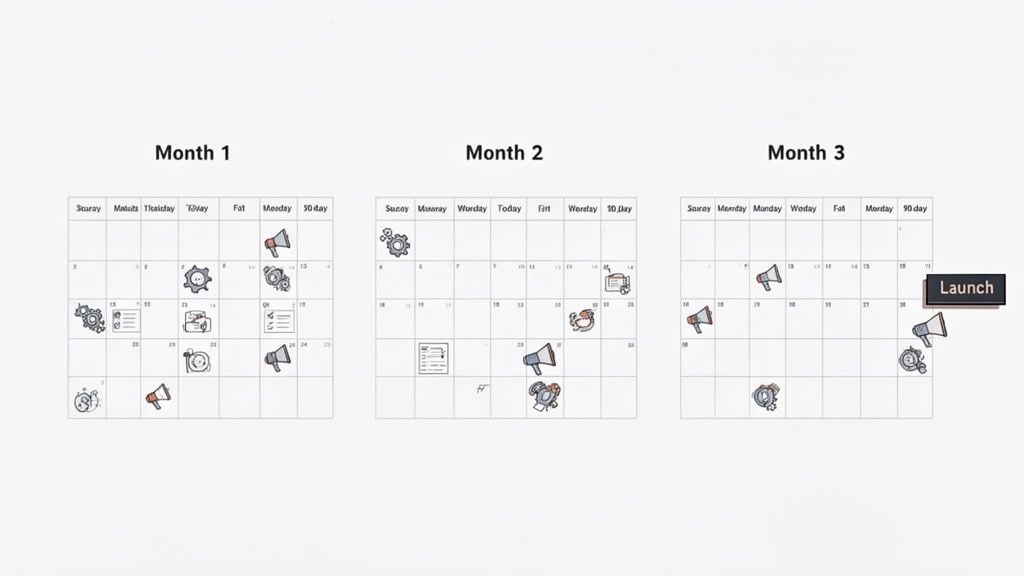
Days 1 through 30
Month one is for business setup and delivery design.
Choose a niche you can serve well with repeatable systems. Contractors, agencies, ecommerce sellers, and consultants all need bookkeeping, but they do not need the same workflows. A narrow niche makes pricing easier, marketing clearer, and automation far more useful because your client base starts to follow similar patterns.
Handle the basics early:
- Register the business: form the entity, get your EIN, and open a business bank account
- Set up your core tools: accounting software, password manager, secure file collection, business email, video meeting tool, and task management
- Build your service model: decide what monthly bookkeeping includes, what cleanup costs extra, and how clients submit records
- Create your client assets: proposal, engagement letter, intake form, access checklist, and month-end delivery checklist
- Configure automation: use tools such as Booksmate to organize document collection, recurring tasks, reminders, and status tracking before the first client arrives
Keep your website simple. One clear page that says who you help, what you do, and how to book a call is enough for launch.
Days 31 through 60
Month two is for lead generation and offer testing.
Start with channels you can maintain consistently from home. LinkedIn works if your profile speaks to one niche and one core result. Referral outreach works if you contact people who already know your work ethic. Local networking can help, but it often produces broader, lower-fit leads than niche online outreach. I would rather have five targeted conversations with agency owners than fifty vague conversations with "small businesses."
Use this period to sharpen your message.
- Refine your LinkedIn profile: clear headline, niche focus, concise service description, direct call to action
- Start outreach: message warm contacts, past colleagues, accountants, fractional CFOs, and ideal prospects
- Post useful content: explain common reporting gaps, cash flow blind spots, or reconciliation problems in your niche
- Run practice calls: get comfortable explaining your process, monthly timeline, and scope boundaries
- Track objections: note where prospects hesitate, then adjust your offer, pricing, or wording
If people keep asking what you do, your offer is too vague. If they understand the service but resist the process, your boundaries are too soft.
Days 61 through 90
Month three is for delivery and proof.
Sign the first right-fit client. Then protect your time by running the process exactly as designed. Do not start making exceptions because you are eager to please. Bad exceptions in month three become operating problems in month twelve.
Focus on five outcomes:
- Close one to three right-fit clients
- Run your onboarding workflow without shortcuts
- Complete the first month accurately and on schedule
- Note every manual step that should be automated
- Request a testimonial after you have delivered real value
At this stage, your tech stack either saves you or slows you down. If client chasing, checklist management, and recurring reminders still depend on memory, you built yourself a job. If Booksmate or a similar system handles recurring admin, you have the beginning of a scalable firm.
The rule for the first 90 days
Protect capacity.
A new bookkeeping business does not fail because the owner lacks hustle. It usually fails because the owner says yes to messy clients, loose scope, custom workarounds, and too many manual tasks. Every one of those choices makes the next client harder to serve.
Build for the business you want at twenty clients, not the one you can barely manage with two. Standardized packages, clean onboarding, recurring workflows, and automation-first delivery give you room to grow without adding chaos at home. That is a successful launch.
Frequently Asked Questions
Do I need an accounting degree to start
No. What you need is competence, reliability, and software fluency. Certification can help you build trust faster, especially if you are newer to client work. Clients care more about whether you can keep their books accurate and their process organized than whether you followed a traditional academic path.
Can I start while working a full-time job
Yes, if you keep the first stage narrow. Choose a niche, keep your service menu tight, and avoid clients who need constant real-time access. A small number of recurring monthly clients is much easier to manage than one chaotic client who expects same-day responses to everything.
How many clients can a solo bookkeeper handle
There is no honest universal number because complexity matters more than count. A solo bookkeeper with standardized clients, tight scope, and strong automation can handle far more than someone doing custom work for every account. Capacity comes from process quality, not hustle.
What if a client is disorganized
Expect some disorganization. Do not build your business around rescuing it for free.
Set a document deadline, use one communication channel for requests, and send a single consolidated follow-up instead of scattered reminders. If a client repeatedly breaks the process, either reprice the account or decide they are not a fit.
Should I offer payroll, tax, and cleanup work right away
Usually no. Start with core bookkeeping and get your monthly workflow stable first. Extra services sound attractive, but they add complexity quickly. Expand only after your main process runs cleanly and you know where your margins from.
Is bookkeeping from home still worth it in 2026
Yes, if you build it like a business and not a collection of freelance tasks. The strongest home firms focus on a niche, set boundaries, use modern tools, and package their work well. That is what keeps the model profitable and sustainable.
If you want to build an automation-first bookkeeping business instead of spending your week logging into vendor portals, take a look at Booksmate. It helps bookkeepers automatically fetch invoices and receipts from online portals and email inboxes, organize documents in one dashboard, and prepare them for export into accounting software. For a home-based firm, that kind of workflow support can make the difference between a practice that scales and one that stalls.