Difference Between Invoice and Receipt A Complete Guide
Confused about the difference between invoice and receipt? Our guide clarifies each document's purpose, timing, and legal role for flawless bookkeeping in 2026.

It’s a question that trips up new business owners all the time: what’s the real difference between an invoice and a receipt? On the surface, they seem similar, but in the world of accounting and finance, they play two very different, very important roles.
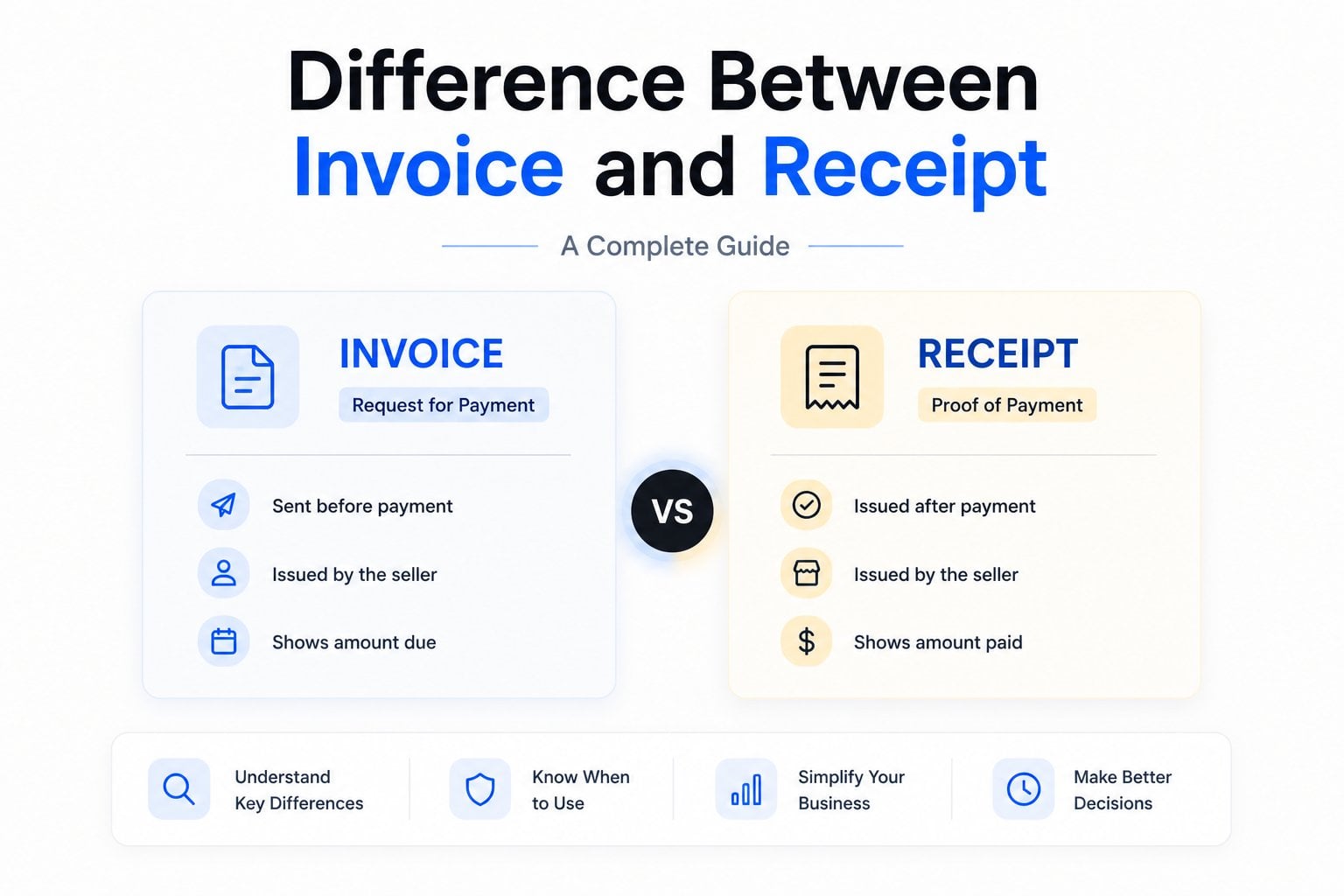
Think of it this way: an invoice is a request for payment. It’s the document you send to a client before they pay you, detailing what they owe for your goods or services. A receipt, on the other hand, is proof of payment. It’s what you give them after the money has changed hands, confirming the transaction is complete.
Invoice Vs Receipt: The Core Differences at a Glance
Let's cut right to the chase. To make this crystal clear, we’ve put together a simple visual and a quick-reference table that lay out the key distinctions. No jargon, just the facts you need.
This infographic breaks it down visually, showing the journey from request to confirmation.
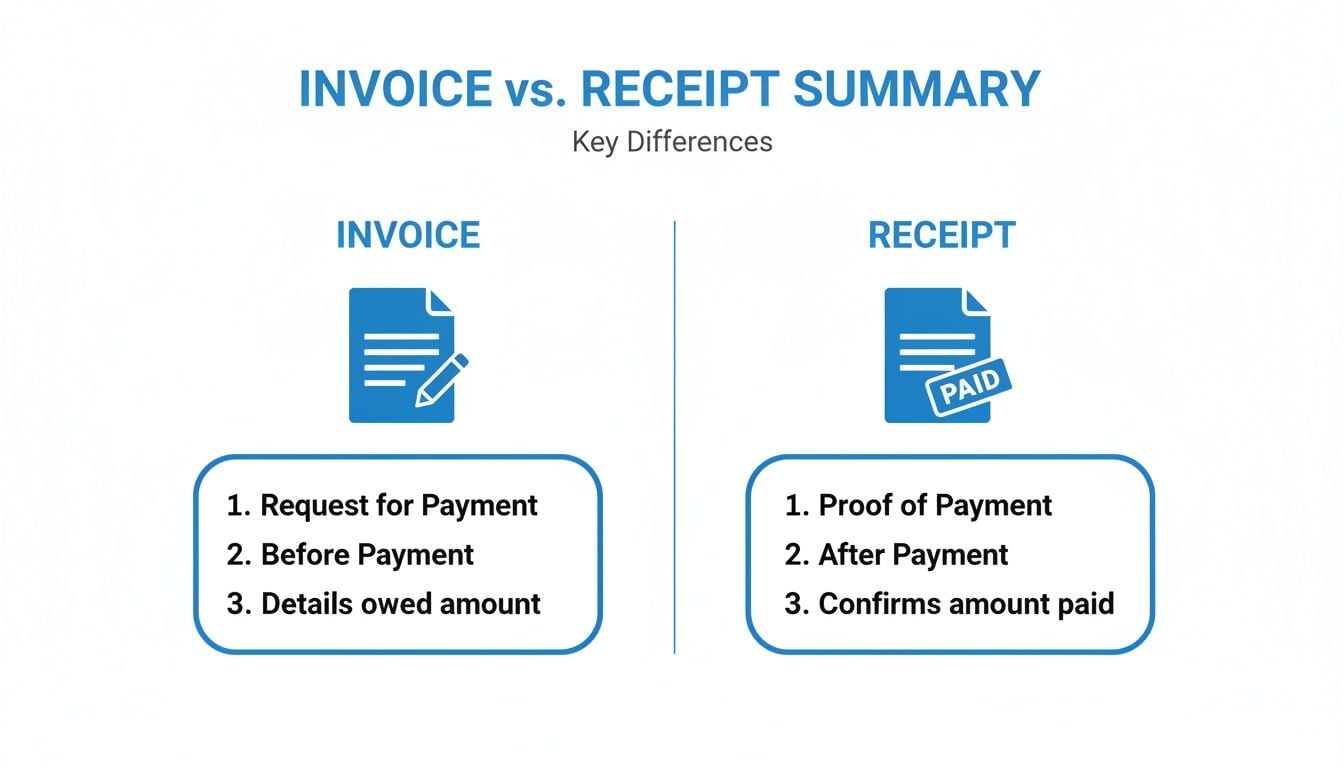
As you can see, the invoice starts the conversation about money owed, while the receipt closes it out, signifying a paid-in-full transaction.
Side-by-Side Comparison
For anyone who needs the facts fast, this table is for you. It’s a straightforward comparison that highlights the fundamental differences between these two crucial documents.
Invoice vs. Receipt Key Differences
Attribute
Invoice
Receipt
Purpose
To request payment for goods or services rendered.
To confirm that a payment has been successfully received.
Timing
Issued before the customer pays.
Issued after the customer pays.
Payment Status
Shows an amount that is currently due.
Shows an amount that has been paid.
Call to Action
"Please Pay By [Date]" or details on how to pay.
"Thank You for Your Payment" or serves as a record.
Accounting Role
Creates an entry in Accounts Receivable (money to come).
Clears the Accounts Receivable entry (money received).
This table lays out the essential functions, but understanding the why behind this distinction is where you can really start to save your business time and money.
Why This Distinction Matters for Your Business
Getting these two documents straight isn't just about good bookkeeping—it has a direct impact on your bottom line. Manually handling an invoice, for example, can be surprisingly expensive. Studies show it can cost a business anywhere from $12.88 to $22.75 per document.
That cost isn’t just for data entry. It includes the time spent on verification, matching it to a purchase order, and processing the actual payment. If your business handles 10,000 invoices a year, you could be looking at over $128,000 in hidden operational costs. You can explore more about these global trends and how to combat them at Parseur.
This is where the right tools come in. By using automated solutions like Booksmate, businesses are slashing these costs by up to 80%. That brings the per-document expense down to as little as $2.36. For any bookkeeper or accounting team, that’s not just a small efficiency gain—it’s a major step toward better profitability and fewer headaches.
The Invoice: Your Official Request for Payment
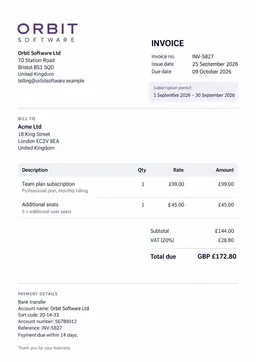
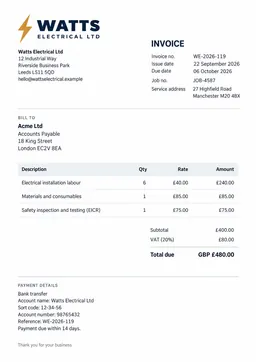
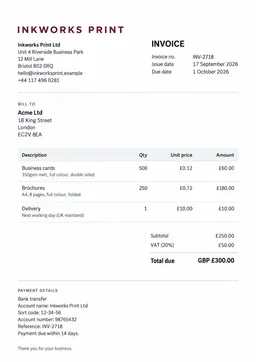
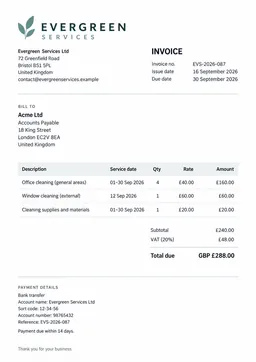
So, what exactly is an invoice? It’s much more than just a piece of paper asking for money. Think of an invoice as the starting pistol for getting paid. It’s a formal, professional document you send to a client after you’ve delivered your goods or services but before they’ve paid you.
At its core, an invoice communicates what you did, what it costs, and when you expect to be paid. A clear, detailed invoice doesn't just look professional—it actively prevents misunderstandings and helps you get your money faster. It sets the stage for a smooth transaction and shows your clients you’re organized and transparent right from the get-go.
What Every Good Invoice Needs
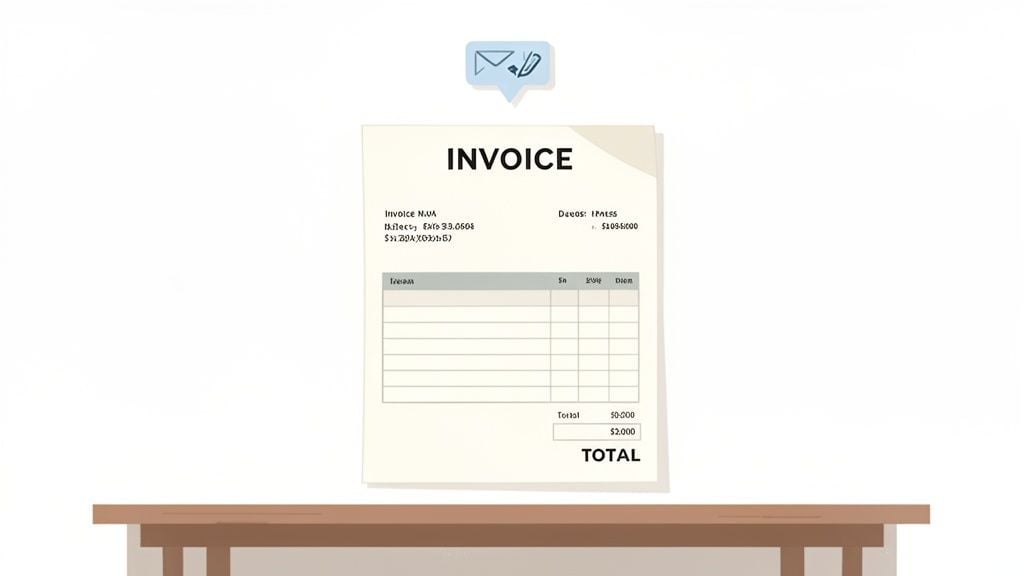
To be taken seriously (and to be legally sound), your invoice needs to include some non-negotiable details. Missing a key piece of information is one of the most common reasons payments get delayed. Every invoice should tell the complete story of the transaction, leaving no room for questions.
Here’s a checklist of the absolute essentials:
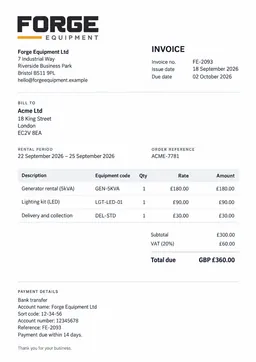
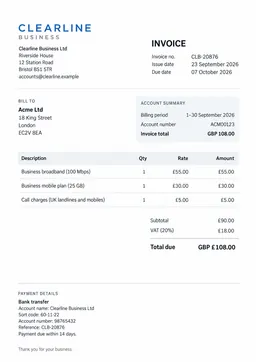
- Unique Invoice Number: This is crucial for your record-keeping. A simple sequential number (like INV-001, INV-002) helps you track payments and avoid confusion.
- Your Business Information: Your company name, address, and contact info. Let them know who is asking for the money.
- Client’s Information: The full name and address of the person or company you're billing.
- Key Dates: Always include the date the invoice is issued and, more importantly, the payment due date.
- Itemized List of Goods or Services: Break down exactly what you're charging for. List each service or product with a description, quantity, rate, and the total for that line item. Transparency is your friend here.
- Total Amount Due: The bottom-line number, making sure to show any taxes, discounts, or shipping costs separately.
- Payment Terms: Tell them how to pay you! Include your bank details, a link to a payment portal, or any other preferred methods. You can also note any late payment fees here.
A solid invoice is the backbone of your accounts receivable. Without it, you're just hoping money shows up. For a deeper look into creating the perfect business invoice, this guide is a fantastic resource.
Expert Take: Don't think of an invoice as just a bill. It's a strategic business tool. It projects professionalism, clearly defines payment expectations, and serves as a legal record protecting your right to get paid for your hard work.
Different Invoices for Different Jobs
You wouldn't use a hammer to turn a screw, and you shouldn't use the same type of invoice for every situation. The right invoice depends on your industry, the project scope, and your agreement with the client. Using the correct format from the start keeps everyone on the same page.
Let’s run through a few common types you’ll likely use.
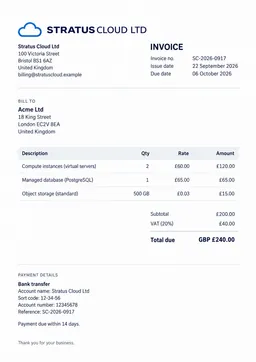
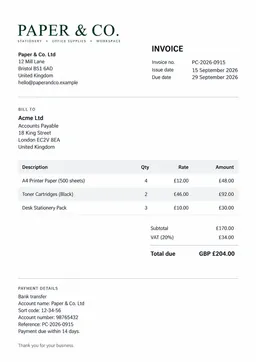
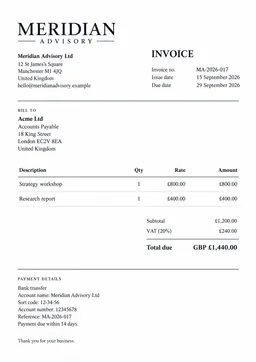
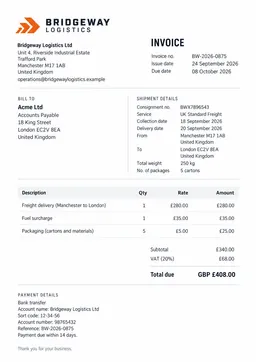
Pro Forma Invoice A pro forma invoice is essentially a "pre-invoice." You send it to a client before you start the work or ship the goods. It’s not an official demand for payment; instead, it’s like a good-faith estimate that outlines the expected costs and secures the client's commitment. They're also frequently used in international shipping for customs purposes.
Interim or Recurring Invoice For long-term projects or ongoing retainers, you’ll want to get paid as you go. That's where interim or recurring invoices come in. You send them at set intervals—say, weekly or monthly—to bill for work completed during that period. This is a game-changer for cash flow, as you aren't stuck waiting for one big payday at the very end of a project.
Final Invoice Just as it sounds, this is the last invoice you send when a project is 100% complete. It officially wraps up the engagement and asks for the remaining balance. A good final invoice will summarize all the work performed and may even reference previous interim payments to show how you arrived at the final amount due.
The Receipt: More Than Just Proof of Purchase
If an invoice is the "please pay," a receipt is the "thank you, we're all set." It's the document that officially closes the loop on a sale, acting as undeniable proof that money has changed hands. While an invoice is a forward-looking request for payment, a receipt is a look back, confirming a debt has been settled.
But this simple piece of paper (or, more often these days, an email) is so much more than a formality. For a customer, it's a vital record for their own finances. For you, the seller, it's the bedrock of accurate accounting and proof that a sale was completed. This is where the difference between an invoice and a receipt really clicks: one opens a financial conversation, the other closes it.
What Makes a Receipt Official?
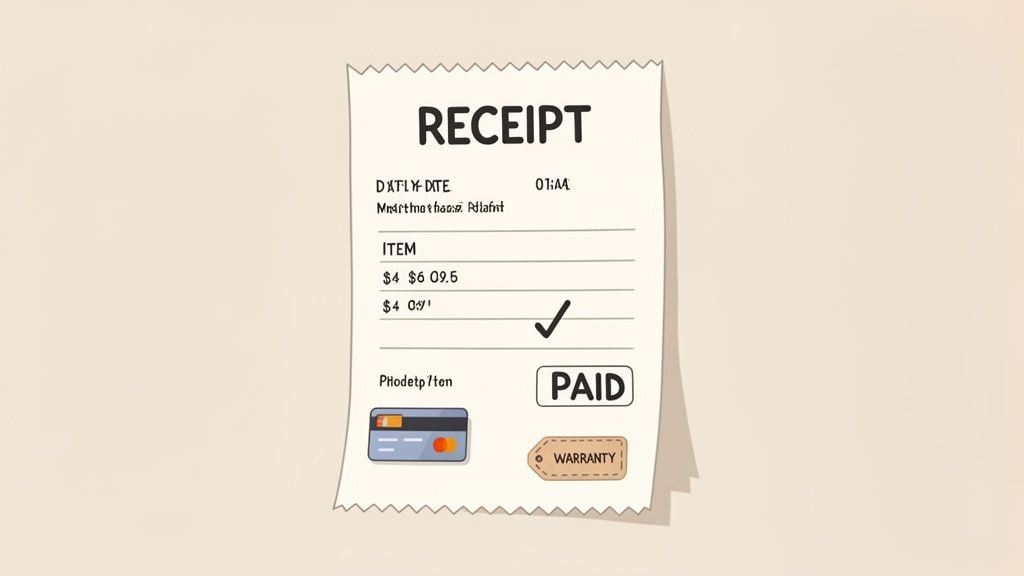
Not all slips of paper are created equal. A hastily scribbled note just won't cut it, especially when it comes to taxes or warranty claims. A legitimate receipt needs to contain specific details to be considered valid. Think of it as the transaction's official birth certificate.
Here are the non-negotiable elements every proper receipt should have:
- Your Business Details: Your business name, address, and contact info.
- Date and Time of Transaction: This pinpoints the exact moment the purchase was finalized.
- An Itemized List: Just like an invoice, it needs to detail what was sold. The key difference is that a receipt confirms these items were paid for and delivered.
- The Total Amount Paid: This must show the subtotal, any taxes, and the final grand total that the customer paid.
- Method of Payment: Was it cash, credit card, or a bank transfer? This detail is crucial for matching up your bank statements with your sales records.
- A Unique Receipt Number: This simple number is a lifesaver for tracking down a specific sale for either you or your customer.
A Receipt's Dual Role: For the Buyer and the Seller
A single receipt serves two very different, yet equally important, purposes. It provides value to both you and your customer long after the transaction is over.
For Your Customer (The Buyer): A receipt is their go-to tool for managing their money and protecting their purchase. They need it for:
- Tracking Expenses: It's fundamental for personal budgeting or business expense reporting.
- Claiming Tax Deductions: For any business or freelancer, receipts are the golden proof of expenses. An auditor won't accept a deduction without one.
- Making Returns & Warranty Claims: It’s the classic "no receipt, no return" policy. It proves where and when they bought the item.
For Your Business (The Seller): On your end, the receipt is a cornerstone of good bookkeeping. It helps you:
- Reconcile Your Accounts: You can match payments received against the invoices you sent, making sure your books are perfectly balanced.
- Verify Your Revenue: Receipts are the primary source documents that prove your income.
- Settle Disputes: If a customer claims they paid when they haven't (or vice versa), the receipt—or lack thereof—is the ultimate proof.
A receipt isn’t just an afterthought to a sale. It’s a vital document that builds customer trust, ensures financial accuracy, and keeps you compliant. It’s the proof that the promise made on an invoice was officially kept.
Digital vs. Paper Receipts: Which Is Better?
Not too long ago, every business owner had a shoebox overflowing with faded paper receipts. Thankfully, we've moved on. Digital receipts sent via email are now common and, in most ways, far better. Legally, a digital receipt is just as valid as a paper one, as long as it includes all the essential information we covered.
The advantages of digital are clear. They don't fade, get lost in a wallet, or end up in the trash. They are also easily searchable in an email client or a bookkeeping app like Booksmate. For your business, going digital is cheaper, faster, and much better for the environment. Plus, it gives you a great opportunity to send a thank-you note, ask for a review, or offer a discount on a future purchase.
How Invoices and Receipts Really Affect Your Bottom Line
Getting invoices and receipts straight isn't just about knowing the right terms—it's about understanding the financial pulse of your business. These two documents tell very different stories about your money, and mixing them up can lead to messy books, cash flow headaches, and serious tax trouble down the road.
Think of an invoice as the first move. When you send one out, you're officially logging an asset in your accounting software under accounts receivable. This is the money people owe you. It makes your balance sheet look good, but remember, it’s not cash in your pocket just yet.
For your client, the reverse is true. Your invoice lands in their accounts payable pile, marking it as a debt they need to settle. This give-and-take is the heart of accrual accounting, showing a complete picture of who owes what, not just what's been paid.
The Accounting Journey from "Sent" to "Paid"
Sending the invoice is just the beginning. The real challenge is the waiting game that follows—that critical gap between sending the invoice and seeing the money hit your bank account.
How long does it take? According to recent accounts payable research, the average invoice gets processed and paid in about 9.2 days, and that’s if things go smoothly. It’s not uncommon for that cycle to drag out for more than two weeks. These delays often happen because of simple human error, with only 32.6% of invoices getting processed without someone having to step in and fix something. For a small business waiting on that cash, every day counts. You can explore more accounts payable statistics that highlight the power of automation to see just how deep these issues run.
This is exactly where the receipt comes in to save the day. When you finally get paid and issue a receipt, you're officially closing the loop on the transaction.
- For you (the seller): The receipt is your cue to clear that debt out of your accounts receivable. The promise of money has now turned into actual cash, and your books are balanced for that sale.
- For your client (the buyer): Your receipt lets them zero out their accounts payable. They now have proof that the debt is settled, which cleans up their balance sheet and updates their cash records.
A "Paid" stamp on an old invoice just doesn't cut it. While it shows the bill is settled, a proper receipt includes crucial details like the payment method, date, and exact time. That's the stuff you need for a clean audit trail and to make sure your bank statements line up perfectly.
Tax Audits and Why This Distinction Is Crucial
Here's where the difference between an invoice and a receipt becomes non-negotiable. When the tax man comes knocking, one of these documents holds all the power, and the other is practically worthless.
Tax authorities want to see proof of an expense, not just a request for payment. An invoice is simply a bill—it shows someone asked you for money, but it doesn't prove you actually paid them.
A receipt, on the other hand, is your golden ticket. It's the official, undeniable proof that money changed hands. It confirms the date, the amount, and how you paid. This is what an auditor will demand to back up every single business expense you claim. If you can't produce a receipt, they can disallow the deduction, leaving you on the hook for back taxes, fines, and interest.
A Real-World Example
Let's break this down. Imagine you're a freelance designer and you just wrapped up a $5,000 project.
- You send an invoice for $5,000. Your accounts receivable goes up, making your books look strong, but your bank balance hasn't changed.
- The client pays you. Cha-ching! Your cash flow finally gets that much-needed boost.
- You issue a receipt. Now you can officially move that $5,000 from accounts receivable to your cash account. The transaction is fully and accurately recorded.
Now, let's flip it. You buy a new $1,500 laptop for your business. The store gives you an invoice, which creates a liability in your accounts payable. Once you pay it and get that receipt, you can confidently claim the $1,500 as a business expense, lowering your taxable income. Without that receipt? You've got no proof, and you're taking a huge financial risk if you get audited.
Choosing the Right Document for Common Business Scenarios
Knowing the textbook definitions is a great start, but the real test is applying this knowledge on the ground. The difference between an invoice and a receipt truly clicks when you see how they operate in everyday business.
Let's walk through a few common situations to watch this paper trail unfold. You'll see how each scenario has a specific trigger for when to send an invoice and when to issue a receipt, highlighting their distinct jobs in a transaction.
Scenario 1: The Freelance Project
Picture this: you're a graphic designer who just wrapped up a logo and branding package for a client. The agreed-upon price is a fixed $2,000.
- Project Completion: The client loves the final designs and gives you the official thumbs-up. Your work is done, which means it’s time to get paid.
- Sending the Invoice: You'll draft and send Invoice #047 for $2,000, listing the "Logo Design and Brand Guidelines" service. You set the payment terms to "Due in 15 days." In your books, this instantly adds $2,000 to your accounts receivable.
- Payment and Receipt: Ten days later, the client sends the full amount via bank transfer. You immediately follow up by issuing Receipt #047, confirming the payment was received. This closes the loop, moves the $2,000 from accounts receivable into your cash account, and gives the client proof of purchase for their own records.
Scenario 2: The Monthly SaaS Subscription
Now, let's switch gears to a recurring payment model, like a software-as-a-service (SaaS) business. Think of a project management tool charging a customer $50 per month. This is where automation really shines.
- Invoice Generation: On the first of the month, the system automatically creates an invoice for the upcoming billing cycle. This invoice is emailed to the customer, mostly for their records, and usually notes that payment will be processed automatically.
- Automatic Payment: On the very same day, the system charges the customer's credit card on file for $50.
- Receipt Issuance: The moment the charge goes through successfully, the system sends a receipt. This document confirms the $50 payment and acts as the customer's official record for expensing the software. In this workflow, the invoice and receipt might be separated by mere seconds.
Slapping a "PAID" stamp on an old invoice and calling it a day is a risky shortcut. For clean books and tax compliance, a separate, dedicated receipt is always the gold standard. It confirms how and when the payment was made—details that a simple paid invoice often leaves out.
Scenario 3: The Retail Store Purchase
In a brick-and-mortar retail setting, the transaction is immediate, so the paperwork is consolidated. Imagine a customer buying a $150 jacket at your boutique.
There's no invoice in this case. Why? Because the payment happens right at the point of sale. There’s no need to formally request money that's already being handed over.
Instead, the second the customer’s card is charged, your POS system prints a receipt. It details the jacket, price, tax, and total paid, giving the customer instant proof of purchase. They need it for returns, and you need it to balance the day's cash drawer.
Scenario 4: The Hourly Consulting Gig
Finally, let's look at an IT consultant who bills a client for 10 hours of work at $150 per hour. This requires meticulous tracking and clear invoicing.
- Tracking and Invoicing: At the end of the month, the consultant totals up their hours. They then create an invoice for $1,500 (10 hours x $150/hour), making sure to attach a timesheet that breaks down the work performed on specific dates.
- Client Payment: The client gets the invoice, reviews the timesheet to confirm the hours, and then processes the payment.
- Issuing the Receipt: As soon as the $1,500 hits the consultant’s bank account, they send a receipt. This officially settles the invoice and provides a clean financial record for both parties, keeping the professional relationship on solid ground.
In every example, the invoice is the formal ask for money owed, and the receipt is the final "thank you, we're all settled." Understanding this fundamental give-and-take is the key to keeping your business finances accurate, transparent, and audit-proof.
Letting Automation Handle the Paperwork
So, you know the difference between an invoice and a receipt. That's a great start. The real headache, though, isn't telling them apart—it's managing the mountain of them that piles up every month. Manually downloading, printing, and keying in data from every single document is a huge time-suck and, frankly, a recipe for mistakes. This is where automation can completely change how your finance team operates.
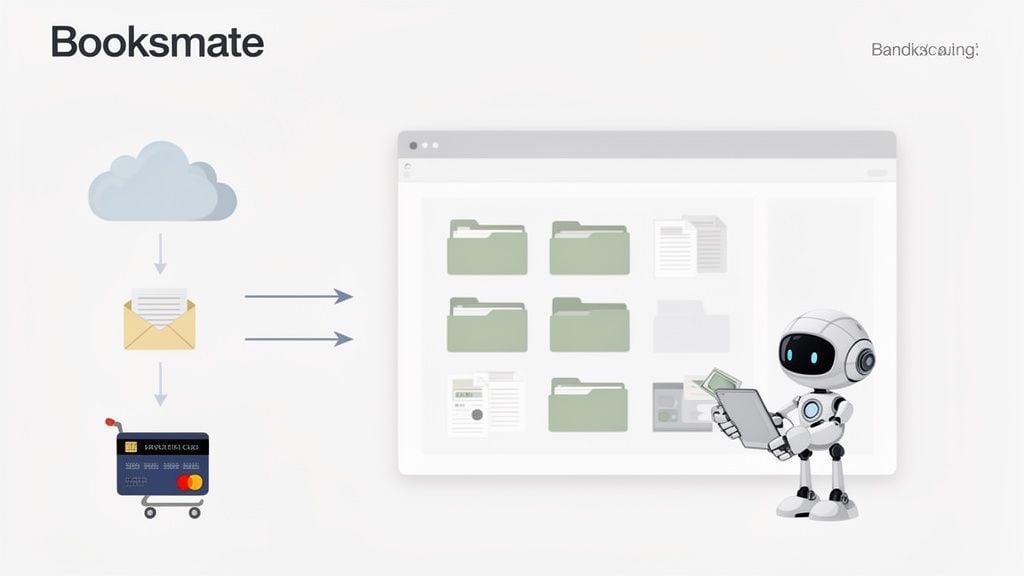
Just think about it: a system that automatically grabs every invoice and receipt from your email inboxes. It can also log into supplier portals like Amazon, Stripe, or Google for you. See how this works as an Amazon invoice downloader. Instead of you or your team spending hours hunting down documents, a smart tool does the heavy lifting, giving you one central, organized home for all your financial papers.
Of course, it's not just about collecting files. Once the documents are in one place, AI gets to work reading and understanding them.
From Mind-Numbing Data Entry to Smart Automation
Modern tools like Booksmate go way beyond basic OCR (Optical Character Recognition), which just pulls raw text from a document. They use sophisticated AI models trained to recognize the anatomy of financial documents, meaning they can correctly pinpoint key information no matter how weird the layout is.
This AI understands what it's looking at. It knows an invoice number isn't a purchase order number, and it can accurately extract line-item details, vendor names, and payment deadlines. For receipts, it grabs the merchant, transaction date, and total paid without missing a beat.
Automation takes the most tedious parts of bookkeeping off your plate. It turns the error-prone slog of manual data entry into a fast, reliable process, freeing you up to focus on strategy instead of being buried in spreadsheets.
The payoff is immediate and easy to see, hitting all the classic pain points that drive finance teams crazy.
- Stop Wasting Time on Data Entry: What takes a person several minutes per document, AI can handle in seconds. This lets you process a much higher volume of paperwork without having to hire more people.
- Prevent Costly Typos: We've all been there—a misplaced decimal or a typo can throw your books out of whack. Automated data extraction is far more accurate, giving you clean, trustworthy records.
- Get Your Books Audit-Ready: With every invoice and receipt collected, categorized, and digitized automatically, you have a perfect, searchable archive. Tax season or a surprise audit becomes a simple, stress-free event.
A Single, Organized Hub for Your Finances
The end goal here is to create one single source of truth for your company's financials. A platform like Booksmate works like a central dashboard where every single invoice and receipt is stored, neatly organized, and ready to be pushed to your accounting software.
This centralized system means nothing gets lost or forgotten. It gives you a complete, up-to-the-minute picture of your expenses and outstanding payments, helping you make smarter financial decisions. To streamline the processes of issuing and managing financial documents, you can also use a program de contabilitate SAGA pentru gestionarea încasărilor și facturilor.
By bringing in smart automation, you’re not just finding a better way to handle invoices and receipts. You’re building a more efficient, accurate, and scalable financial backbone for your entire business.
Frequently Asked Questions
Even when you feel you've mastered the difference between an invoice and a receipt, some real-world scenarios can still trip you up. Let's walk through a few of the questions we hear all the time to make sure you're handling your documents like a pro.
Can an Invoice Marked 'Paid' Be a Receipt?
We see this one a lot. While stamping an invoice as 'Paid' shows the bill has been settled, it's not a true substitute for a receipt, especially when the tax man comes knocking. Think of it this way: a proper receipt includes specific details that prove the transaction happened, like the exact date, time, and method of payment (e.g., credit card, bank transfer).
An invoice, even a paid one, often lacks this level of detail. Relying on it is a gamble that could get your expense deductions denied in an audit. Your best bet is to always issue a separate, formal receipt. It creates a clean, undeniable record for both you and your customer.
What if a Vendor Never Sends a Receipt?
You've done your part and paid the invoice, but now you're met with radio silence. Where’s the receipt?
First, do a quick search in your spam folder or any online payment portals you used. Many receipts are auto-generated and can get lost in the shuffle. If you still come up empty, send a polite but direct email requesting a copy for your records. This creates a paper trail showing you made a good-faith effort to get the right documentation, which is always a good thing for your books.
Key Takeaway: A pro forma invoice is a non-binding quote to align on scope and cost before work begins. A standard commercial invoice is a legal, binding request for payment after work is delivered. They are not interchangeable.
Is a Pro Forma Invoice a Real Invoice?
This is a great question because the names are so similar, but no, they serve completely different purposes. A pro forma invoice is essentially a preliminary quote you send before a project starts or goods are shipped. It gives the client a heads-up on the expected costs and terms, but it's not a legal demand for payment.
On the other hand, a standard commercial invoice is the real deal. It’s the official bill you send after you’ve delivered your goods or services. This document is legally binding, officially requests payment, and is what creates an entry in your accounts receivable.
Ready to stop chasing down documents and eliminate manual data entry? Booksmate automatically collects all your invoices and receipts from emails and supplier portals, extracts the key data, and organizes everything in one central dashboard. See how much time you can save and get your weekends back.